Orthodontist Stuart, Port St. Lucie, Ft Pierce, Vero Beach, Palm Bay

Types of Teeth Whitening in Vero Beach, Fort Pierce, Stuart, and Palm Bay, FL
Everything You Need to Know and What Not to Do
When orthodontic treatment ends, the journey to a perfect smile doesn’t stop. Retainers play an essential role in keeping teeth aligned after braces or Invisalign. Without them, teeth can shift back to their original position. At Vakani Orthodontics in Stuart, Palm Bay, Vero Beach, and Fort Pierce, we help patients protect their results by providing clear information about the types of retainers available and the most important things to avoid when using them.
Types of Retainers
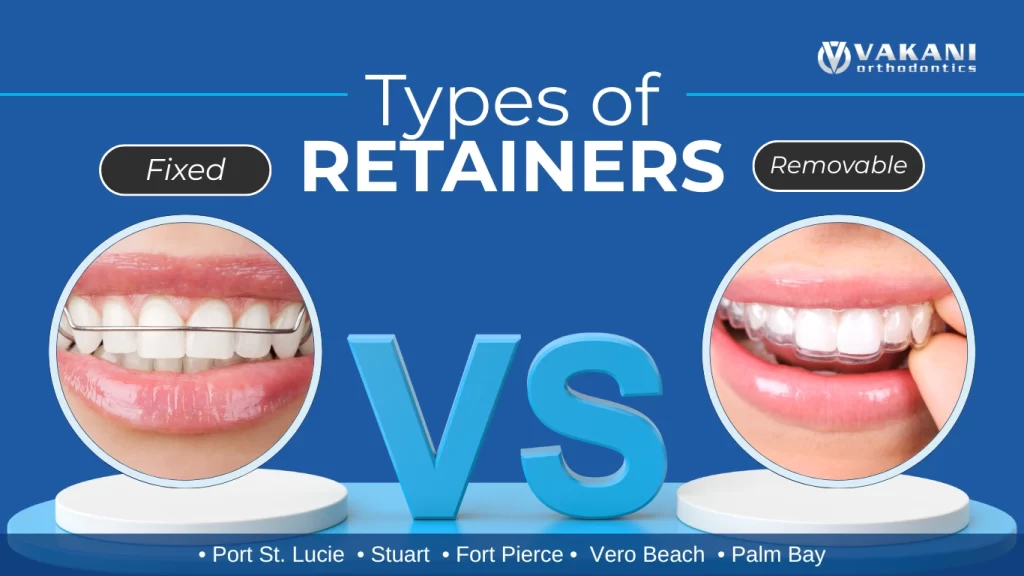
There are two main categories of retainers: removable and fixed. Both serve the same purpose but function differently depending on each patient’s needs.
Removable Retainers
Removable retainers are the most common type, made from clear plastic or acrylic combined with wires. They are easy to take out when eating, brushing, or flossing. The clear version, often called an Essix retainer, is almost invisible, making it a popular choice among adults and teens. Hawley retainers, made of acrylic and wires, are highly durable and can be adjusted if small changes are needed.
Fixed Retainers
Fixed retainers, sometimes called bonded retainers, are thin wires placed behind the front teeth. They stay in place permanently, making them an excellent option for patients who want a worry-free solution. Because they are not removable, they require careful cleaning, but they provide continuous protection against teeth shifting.
What Retainers Should Not Do
While retainers are crucial for maintaining your smile, there are things they should never do. Patients often wonder if something feels off or if their retainer is not functioning properly. Here are clear signs that your retainer is not doing its job:
- A retainer should not cause pain or injury. Mild pressure is normal, but sharp pain or sores on gums and tongue are signs of a poor fit or damage.
- A retainer should not feel loose. If it falls out easily or moves around, it won’t keep your teeth in place.
- A retainer should not break easily. While normal wear is expected, frequent cracks, bends, or broken wires mean it’s time for a replacement.
- A retainer should not be neglected. Leaving it out for long periods can allow teeth to shift back, reducing the success of orthodontic treatment.
- A retainer should not be exposed to heat or pressure. Leaving it in a hot car or cleaning it with boiling water can warp its shape.
Daily Care for Retainers
To make the most of your retainer, it’s important to care for it properly. Always store it in its case when not in use, clean it daily with mild soap and water, and avoid harsh chemicals that may damage the material. Regular dental checkups at Vakani Orthodontics ensure your retainer is functioning properly and keeping your smile stable.
Why Retainers Matter for Long-Term Results
After braces or Invisalign, teeth are still adjusting to their new positions. The bone and tissues around them need time to stabilize. Retainers act as a safeguard, preventing relapse and helping patients enjoy their new smile for years to come. Skipping retainer use or ignoring problems can undo months or even years of orthodontic work.
When to Contact Your Orthodontist
If your retainer doesn’t fit properly, feels uncomfortable, or gets damaged, contact Vakani Orthodontics right away. Ignoring issues can lead to teeth shifting, which may require additional treatment. Our team is ready to guide you on how to handle these situations and keep your treatment results intact.
At Vakani Orthodontics, we are committed to helping patients in Stuart, Palm Bay, Vero Beach, and Fort Pierce maintain healthy, beautiful smiles after orthodontic care. If you have questions about your retainers or need a replacement, call us today at 772-287-8415 to schedule an appointment.
FAQs About Retainers
1. How long do I need to wear retainers?
Most patients need retainers full-time at first, then only at night. Your orthodontist will guide you on your specific timeline.
2. Can I eat while wearing my retainer?
No, always remove removable retainers before eating to avoid damage. Fixed retainers stay in place but require careful cleaning.
3. What happens if I lose my retainer?
Contact your orthodontist immediately. Waiting too long may cause teeth to shift back.
4. How do I clean my retainers properly?
Use mild soap and water or special cleaning tablets. Avoid hot water, which can warp them.
5. Why does my retainer feel tight sometimes?
Tightness may occur if you haven’t worn it consistently. It’s a reminder that retainers are essential to prevent teeth from moving.
Category
- Braces and Invisalign Fort Pierce
- Braces and Invisalign Palm Bay
- Braces and Invisalign Port St Lucie
- Braces and Invisalign Stuart
- Braces and Invisalign Vero Beach
- Braces Cost in Florida
- Braces in the Treasure Coast FL
- Braces Near Me in Fort Pierce
- Braces Near Me in Palm Bay
- Braces Near Me in Port St Lucie
- Braces Near Me in Stuart
- Braces Near Me in Vero Beach
- Braces Tips
- Braces Tips
- In The Press
- Invisalign
- Invisalign in the Treasure Coast FL
- Invisalign Near Me in Fort Pierce
- Invisalign Near Me in Palm Bay
- Invisalign Near Me in Port St Lucie
- Invisalign Near Me in Stuart
- Invisalign Near Me in Vero Beach
- Nearest Orthodontists
- Offers
- Orthodontic Treatment
- Orthodontics Fort Pierce
- Orthodontics Palm Bay
- Orthodontics Port St Lucie
- Orthodontics Stuart
- Orthodontics Vero Beach
- Orthodontist Near Me
- Orthodontist Near My Area
- Orthodontists in the Treasure Coast FL
- Sponsorships
- Vakani Orthodontics
- VakaniOrtho.Com