Orthodontist Stuart, Port St. Lucie, Ft Pierce, Vero Beach, Palm Bay

Stopped Wearing Your Retainers? Here’s What Can Happen to Your Smile in Fort Pierce, Stuart, Palm Bay, Port St. Lucie, and Vero Beach
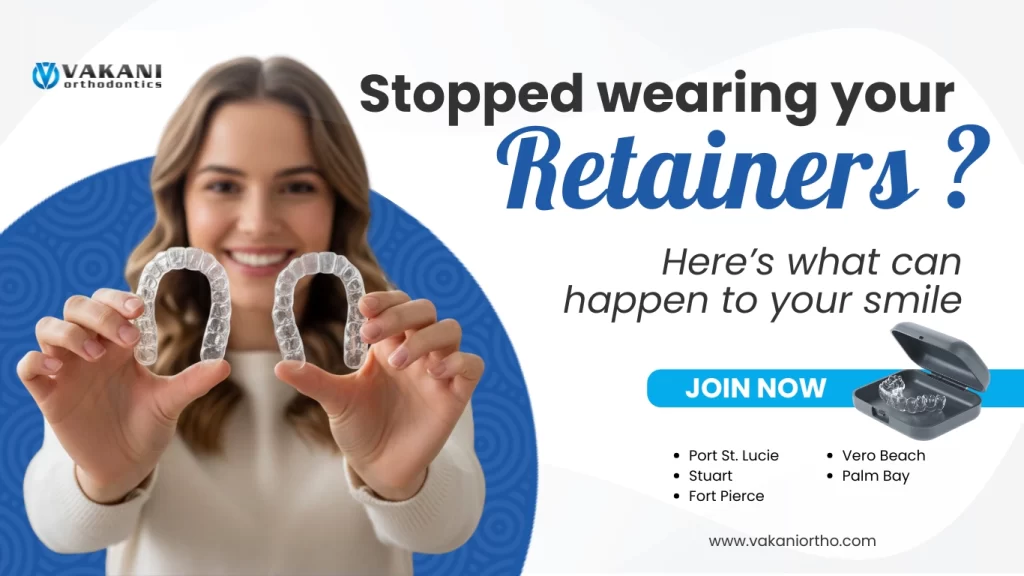
After finishing orthodontic treatment, many patients believe the hard part is over. Your braces are off, your smile looks great, and life moves on. But one of the most important steps in maintaining your results often gets overlooked: wearing your retainers consistently. If you’ve stopped wearing your retainers, you’re not alone—and understanding what can happen next is key to protecting your smile long-term.
At Vakani Orthodontics, serving Fort Pierce, FL, Stuart, FL, Palm Bay, FL, Port St. Lucie, FL, and Vero Beach, FL, our team led by Dr. Arvind K. Vakani, DMD, Kevin S. Vakani, DDS, and Patricia Lima, DDS focuses on educating patients so they feel confident, informed, and motivated—never scared.
Why Retainers Matter After Orthodontic Treatment
Once braces or aligners are removed, your teeth are not permanently fixed in place yet. Teeth naturally want to shift back toward their original positions, especially in the months and years following treatment. This is why retainers are a critical part of orthodontic care.
A dental retainer helps stabilize your teeth while the surrounding bone and tissues adapt to their new alignment. Whether you wore traditional braces or aligners, retainer braces play a vital role in preserving your results and keeping your smile aligned.
What Happens When You Stop Wearing Your Retainers?
Stopping retainer use doesn’t mean your smile will change overnight, but gradual shifts can occur over time. Some patients notice subtle crowding, spacing, or changes in bite alignment. These changes are often slow and may not be obvious at first, which is why many people don’t realize their teeth are moving until the shift becomes more noticeable.
The good news? Early changes are usually manageable, especially when addressed promptly by an orthodontic professional. Wearing your retainers as recommended can help prevent the need for future corrective treatment.
Common Signs Your Teeth May Be Shifting
One of the earliest signs is that your retainer feels tight or no longer fits comfortably. You might also notice minor changes in how your teeth touch when you bite or subtle crowding in the front teeth. These signs don’t mean something is “wrong”—they’re simply signals that your teeth are responding to reduced retainer use.
Scheduling a check-up can help determine the best next step, often with simple adjustments or guidance.
Can You Start Wearing Your Retainers Again?
In many cases, yes. If you’ve stopped wearing your retainers but still have them, restarting use may help guide your teeth back into place—especially if the movement is minimal. However, forcing a retainer that doesn’t fit properly isn’t recommended.
An orthodontic evaluation allows your provider to assess fit, comfort, and alignment, and determine whether a replacement dental retainer or minor adjustments are needed.
Retainers Are Part of Lifelong Smile Care
Orthodontic treatment doesn’t truly end when braces come off—it transitions into maintenance. Retainers are designed to be easy, discreet, and comfortable, making them a simple part of daily routines. Think of them as insurance for the smile you worked hard to achieve.
By wearing your retainer as instructed, you protect your alignment, bite, and overall oral health without disrupting your lifestyle.
Trusted Orthodontic Care Near You
Vakani Orthodontics proudly provides personalized orthodontic care across Fort Pierce, Stuart, Palm Bay, Port St. Lucie, and Vero Beach. Our experienced team focuses on long-term results, patient comfort, and clear education every step of the way.
If you’ve stopped wearing your retainers or have questions about dental retainer and retainer braces options, our team is here to help.
Schedule your appointment today:
(772) 465-5535 | (321) 802-1100 | (772) 212-3203 | (772) 287-8415 | (772) 400-1304
FAQs
Do teeth really move if I stop wearing my retainer? Yes, teeth can gradually shift without consistent retainer use
How long do I need to wear retainers? Most patients benefit from long-term or lifelong nighttime wear
What if my retainer doesn’t fit anymore? An orthodontist can evaluate and recommend the right solution
Are retainers only for braces patients? No, aligner patients also need dental retainers
Can a new retainer help if my teeth shifted slightly? Yes, early changes are often easy to manage
- Braces and Invisalign Fort Pierce
- Braces and Invisalign Palm Bay
- Braces and Invisalign Port St Lucie
- Braces and Invisalign Stuart
- Braces and Invisalign Vero Beach
- Braces Cost in Florida
- Braces in the Treasure Coast FL
- Braces Near Me in Fort Pierce
- Braces Near Me in Palm Bay
- Braces Near Me in Port St Lucie
- Braces Near Me in Stuart
- Braces Near Me in Vero Beach
- Braces Tips
- Braces Tips
- In The Press
- Invisalign
- Invisalign in the Treasure Coast FL
- Invisalign Near Me in Fort Pierce
- Invisalign Near Me in Palm Bay
- Invisalign Near Me in Port St Lucie
- Invisalign Near Me in Stuart
- Invisalign Near Me in Vero Beach
- Nearest Orthodontists
- Offers
- Orthodontic Treatment
- Orthodontics Fort Pierce
- Orthodontics Palm Bay
- Orthodontics Port St Lucie
- Orthodontics Stuart
- Orthodontics Vero Beach
- Orthodontist Near Me
- Orthodontist Near My Area
- Orthodontists in the Treasure Coast FL
- Sponsorships
- Vakani Orthodontics
- VakaniOrtho.Com